
Author Darlene J. Conard
David, in a moment of human frailty, reached for a number instead of reaching for God. By counting the people, he tested the Lord—trying to measure strength with statistics rather than trust. And so the prophet Gad arrived, carrying three heavy choices like thunderheads on the horizon: seven years of famine, three months running from enemies, or three days of a divine pestilence sweeping the land.
Each option was a mirror reflecting consequence. Yet David, trembling but wise, placed himself in the hands of the Lord, whispering the truth he knew deep in his bones: “His mercies are great.” He chose the judgment of God over the cruelty of men.
And mercy came swiftly.
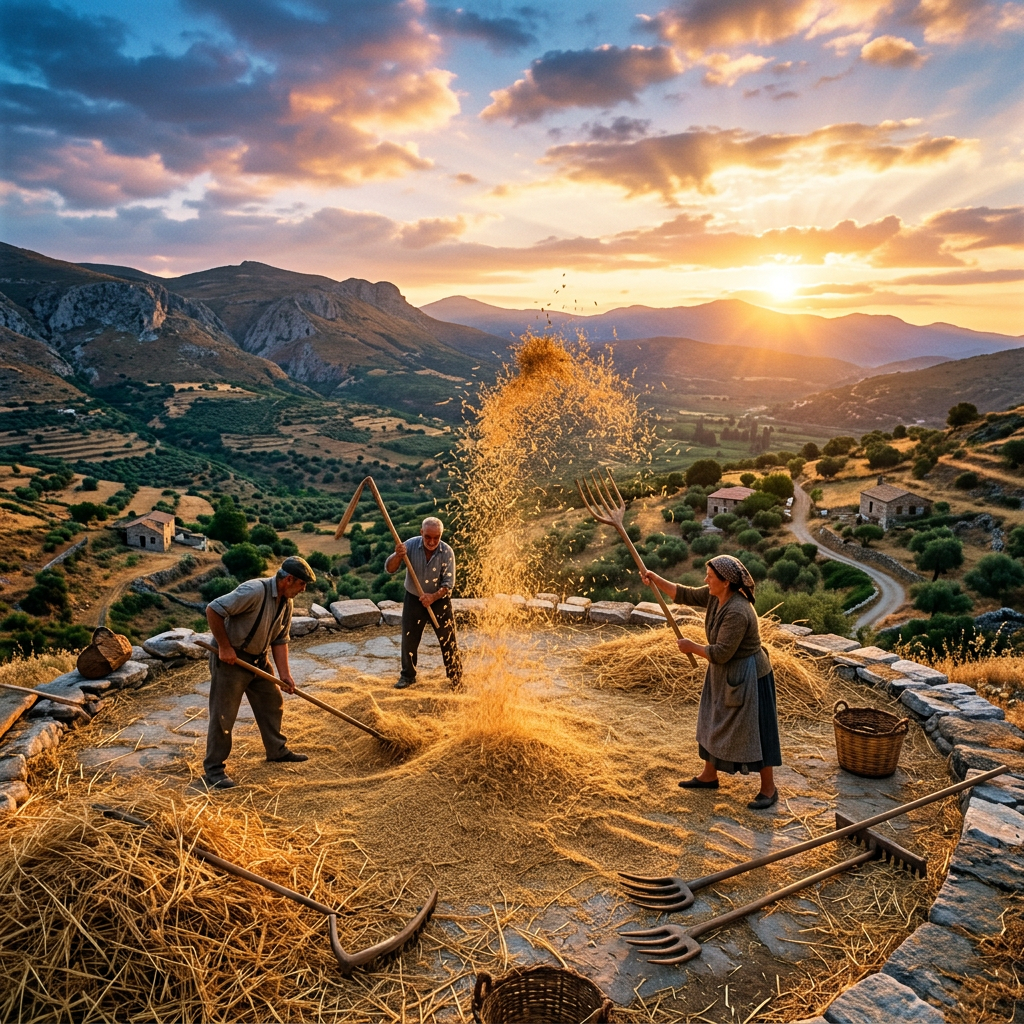
As the angel lifted his hand to strike, God’s voice broke through the heavens—firm, compassionate, sovereign: “It is enough. Stay your hand.” The angel halted at the threshing floor of Araunah the Jebusite, a place that would become a hinge in Israel’s spiritual history. A place where judgment paused and mercy descended. A place where heaven touched earth.
David, undone by remorse, moved toward restoration. He purchased the oxen, the wood, the instruments of threshing—not as mere tools, but as symbols of surrender. On that sacred ground, he built an altar. Not a monument to his failure, but a gateway to forgiveness. He laid his offering down, knowing the fire of God would fall—not to destroy him, but to purify him.
There, on the threshing floor, David experienced a holy stillness. A spiritual epiphany. The weight of guilt lifted like chaff caught in a divine wind. He stood renewed, separated from the sin that once clung to him.
And this is where the deeper symbolism blooms.
The threshing floor is the place where wheat is separated from waste—where the valuable is distinguished from the valueless. This is the same spiritual dividing line Jesus later confronted in the Pharisees and Sadducees: the difference between those who carried truth in their hearts and those who carried religion only on their lips.
When David purchased the threshing floor, he wasn’t just buying land. He was stepping into a spiritual separation—distancing himself from anything, or anyone, that could not walk with him into God’s purpose. It was a declaration: “Let the impure be sifted out. Let only what is true remain.”
A few nights ago, as you lay half-awake, the Holy Ghost whispered “contaminated wheat” into your spirit. And suddenly, the threshing floor became more than a story—it became a mirror. A message. A warning. A cleansing.
The sermon you heard confirmed it: before God ushers us into a new season, He threshes us. He shakes loose the impurities. He removes the contaminated wheat—old habits, toxic influences, hidden compromises, spiritual residue that cannot survive the next level.
Everything misaligned with God’s values is sifted away. Everything harmful to your growth is separated. Everything that blocks your ability to lead souls toward Him is burned off like chaff in the wind.
This revelation has caused you to search yourself, to examine the wheat of your own spirit, to ask what God is removing and what He is refining.
And here is the encouragement woven through it all:
God threshes because He loves. God purifies because He prepares. God separates because He is about to elevate.
The threshing floor is not a place of loss—it is a place of becoming.
“He shall sit as a refiner and purifier of silver.” — Malachi 3:3
Feel free to forward it to anyone you wish. My mission is to encourage everyone to follow our Lord Jesus Christ with all their heart, soul, mind, and strength. ©Darlene J. Conard Vision Ministries 2024. This may not be republished or used without the author’s written consent. The photograph is AI-generated. Darlene J. Conard is also affiliated with Glory Carrier Ministries.